

Azrieli Accelerator Impact
The Azrieli Accelerator supports innovative research and strengthens unique collaborations to advance understanding in neurodevelopment and support individuals affected by neurodevelopmental conditions.
Azrieli Accelerator Professorship Program
As part of the Azrieli Accelerator's mission to advance transdisciplinary research in neurodevelopment across the lifespan, the Professorship Program supports new faculty positions across UCalgary’s campus to attract experts exploring neurodevelopment from diverse disciplinary perspectives.
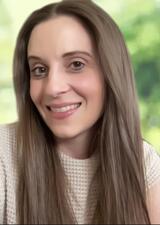
Dr. Tamara Bodnar, PhD
Azrieli Accelerator Assistant Professor in Transdisciplinary Neurodevelopment Research, Department of Biological Sciences, Faculty of Science
Dr. Tamara Bodnar studies Fetal Alcohol Spectrum Disorder (FASD) using a translational approach that includes pre-clinical animal models and clinical research. Her work examines the impact of prenatal alcohol exposure on the gut-brain-immune system across the lifespan, and parallel outcomes in children and adults with FASD. Dr. Bodnar is an Indigenous scholar and has ongoing partnerships with Indigenous communities with the goal of re-framing conversations and education around alcohol-use and FASD, as well as decreasing stigma. Read more about Dr. Bodnar's work.
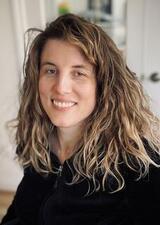
Dr. Stephanie Chipeur, JD
Azrieli Accelerator Assistant Professor in Law & Disability Policy, Faculty of Law and School of Public Policy
Dr. Stephanie Chipeur studies human rights and disability policy with the aim of reforming program design and compensation amounts for caregivers. Her research centres around understanding case law and advancing comparative policy analysis related to caregivers of youth with disability. Read more about Dr. Chipeur's work.

Dr. Eli Kinney-Lang, PhD
Azrieli Accelerator Assistant Professor in Inclusive Biomedical Engineering Technologies for Neurodevelopment, Department of Biomedical Engineering, Schulich School of Engineering
Dr. Eli Kinney-Lang has been investigating the intersection between neurotechnology and neurodevelopment for the better part of the last decade. His primary interest is looking at how to improve brain-computer interfaces (BCIs) for children living with complex needs, particularly through a lens of inclusive engineering and game development. As Azrieli Accelerator Assistant Professor, Co-Director of BCI4Kids, and CEO and Founder of BCI Games, Dr. Kinney-Lang is expanding the impact and reach of BCI systems for children.

Dr. Linda Nguyen, PhD
Azrieli Accelerator Assistant Professor in Youth, Sibling, and Community Engaged Research, Faculty of Social Work
Dr. Linda Nguyen studies how to support youth with disabilities and siblings during the transition to adulthood. Throughout her research, she partners and engages with interested parties including youth with disabilities, siblings, families, healthcare professionals, community organizations, and policymakers. Dr. Nguyen aims to mobilize and apply her research to inform policies and health practices.

Dr. Laura St. John, PhD
Azrieli Accelerator Assistant Professor in Exercise and Health Research for Neurodiverse Women & Girls, Faculty of Kinesiology
Dr. Laura St. John is an AuDHD self-advocate who studies physical literacy for neurodiverse populations. Her research focuses on people with intellectual disability, developmental disability, autism, and ADHD, studying how health outcomes (i.e., anxiety, sleep, motivation) as well as sexual and reproductive health can be improved through greater physical literacy skills in neurodiverse young women. Read more about Dr. St. John's work.

Dr. Ami Tint, PhD
Azrieli Accelerator Assistant Professor in Neurodiversity & Intersectionality, Department of Psychology, Faculty of Arts
Dr. Ami Tint uses multiple methods to understand how to improve supports and services for people with neurodevelopmental conditions, with a particular focus on the mental health needs of Autistic girls and women. She studies program development and evaluation with the aim of improving equitable access to care for neurodivergent people. Dr. Tint strives to achieve meaningful community partnerships and engages in coproduced research to inform clinical practice.
Azrieli Accelerator Catalyst Grants
Catalyst Grants support research teams that are unlocking discoveries and supporting children and adults with autism, ADHD and other neurodevelopmental conditions. Representing basic science, clinical research and social and population health, each project brings a diverse range of expertise to understanding neurodevelopment and neurodevelopmental conditions across the lifespan.
The 2024 Catalyst Grant recipients span the accelerator’s keystone areas: brain circuitry, microbiome influences, and supports, services and systems:

Principal Investigator: Dr. Gerald Giesbrecht, PhD, Department of Pediatrics, Cumming School of Medicine.
Investigating the early life gut microbiome of children at risk for autism
This project aims to identify gut microbes or metabolic pathways that are differentially abundant in children at risk for autism.
Co-applicants: Dr. Sarah MacEachern, Dr. Catherine Lebel, Dr. Marcel van de Wouw, Dr. Lianne Tomfohr-Madsen, Dr. Marie-Claire Arrieta, Dr. Leila Rezaei.

Principal Investigator: Dr. Alan Martino, PhD, Department of Community Health Services, Cumming School of Medicine.
Research team: Jordan Parks, Rufi Oswaldo, Thomas Tri, Hannah Maleski, Lyndon Parakin.
Autistic Voices, Inclusive Choices: Shaping the Future of Sexual Health Education
By exploring and enhancing sexual health education for Autistic adults through workshops and interviews, this research aims to dismantle stereotypes, embrace unique perspectives and create more inclusive, impactful educational materials.

Principal Investigator: Dr. Diwaker Krishnamurthy, PhD, PEng, Department of Electrical and Software Engineering, Schulich School of Engineering.
Co-applicant: Dr. Mea Wang
Collaborator: Dr. Vikram K. Jaswal
AI-driven augmented reality agents to support communication for nonspeaking Autistic people
About 30 per cent of Autistic people are nonverbal. This project explores AI-driven augmented reality tools that allow people to complete spelling exercises independently.

Principal Investigators: Julia Kirkham, MD, Associate Professor, Department of Psychiatry, Cumming School of Medicine; Dallas Seitz, MD, PhD, Professor, Department of Psychiatry, Cumming School of Medicine.
Neurodevelopmental disorders and aging in Alberta
This project brings together researchers and partners focused on improving care for people with neurodevelopmental disorders as they age.
Co-investigators: Dr. Lilian Thorpe, Dr. Rebecca Barry, Dr. Vivian Ewa, Dr. Jeremy Quickfall MD, Dr. Howie Wu MD

Principle investigator: Dr. Kara Murias MD, PhD, Department of Pediatrics, Cumming School of Medicine.
Co-investigators: Dr. Ashley Harris, Dr. Alex McGirr, Dr. Signe Bray.
Research team: Dr. Marilena DeMayo, Ryan Verbitsky
Investigation of dopamine in ADHD using Neuromelanin sensitive MRI
Using a new neuroimaging technique, neuromelanin MRI, this project aims to understand how dopamine production in the brain stem relates to brain networks and executive function in children to better understand the effects of ADHD medications.

Principal Investigator: Dr. Markus Geuking, PhD, Department of Microbiology, Immunology and Infectious Diseases, Cumming School of Medicine.
Research team: Dr. Henry H. Nguyen, Dr. Shokouh Ahmadi.
The impact of viral maternal immune activation-induced changes in microbiota composition, metabolite profile, and intestinal permeability on neurodevelopment in offspring
This project investigates how changes that happen in intestinal permeability during viral infection can impact neurodevelopment of the fetus.

Collaborations across UCalgary exploring neurodevelopment
First recipients of Azrieli Accelerator Catalyst Grants leverage expertise and partnerships to advance important research.
One Child Every Child Strategic Catalyst Grants
The One Child Every Child Strategic Catalyst Grants foster interdisciplinary collaborations across One Child Every Child (OCEC) institutional and community partnerships to advance child-health focused research projects. The Azrieli Accelerator partnered with One Child Every Child to award funding to these research teams in 2024:

Principal Investigators: Dr. Jiami Guo, PhD, Assistant Professor, Department of Cell Biology and Anatomy, Cumming School of Medicine; Dr. Douglas Mahoney, PhD, Assistant Professor, Department of Microbiology, Immunology and Infectious Diseases, Cumming School of Medicine.
Primary cilia safeguard neuronal development and are vulnerable to environmental risks underlying ASD

Principal Investigators: Dr. Tamara Bodnar, PhD, Azrieli Accelerator Assistant Professor, Department of Biological Sciences, Faculty of Science; Dr. Steven Vamosi, PhD, Department of Biological Sciences, Faculty of Science; Dr. Catherine Lebel, PhD, Associate Professor, Department of Radiology, Cumming School of Medicine; Dr. Carly McMorris, PhD, Associate Professor, School and Applied Psychology, Werklund School of Education.
Multigenerational perspectives on connections between the land, cultural practices, and child health
Co-investigator: Dr. Marilyn Bennett, PhD, Associate Professor, Faculty of Social Work.