NEURONAL-SILICON INTERFACING
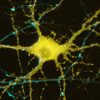
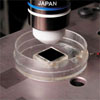
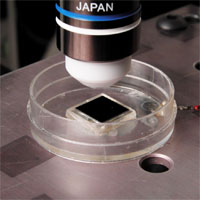
Photoconductive stimulation was invented by my colleagues and me in the lab of Dr. Yukiko Goda at UCSD, and is based on the change in conductivity of silicon when illuminated by visible light. Neurons grown on the surface of specifically manufactured silicon wafers can be individually targeted and fired at a user-defined frequency or in specific patterns. Combined with calcium- or voltage-sensitive dye imaging of the neuronal electrical activity, simultaneous two-way communication with hundreds of neurons has become a reality.
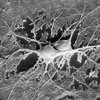
Using this technology we have an opportunity to monitor, among many things, the short term and long term structural changes in the wiring of neurons in response to particular activity patterns.
RESOURCES
Goda Y. & Colicos MA (2006).Photoconductive stimulation of neurons cultured on silicon wafers. Nat Protoc;1(1):461-7. PubMed